
Winter Tires
Dedicated snow and ice tires with soft compounds and dense siping for cold months only.
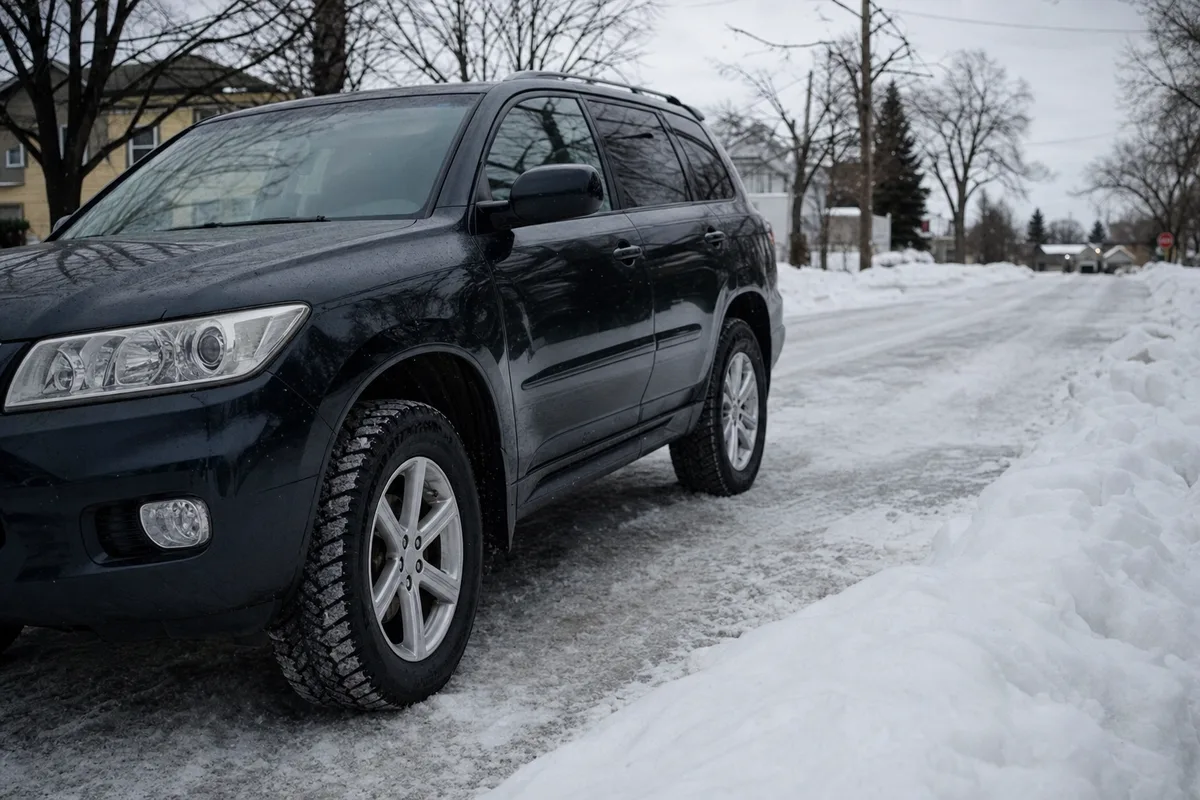
Winter tires, sometimes still called snow tires, are built around a single job: stopping and turning on snow, slush and ice when the temperature is below about 45 degrees Fahrenheit. The rubber compound stays soft in deep cold, the tread is cut with thousands of tiny sipes that bite into ice, and the wide grooves clear slush. The difference is not subtle. On packed snow a good winter tire can stop a car in half the distance of an all-season, which is the difference between a scare and a collision.
They are for drivers in the northern tier of the country, in mountain regions and anywhere winter lasts months rather than days. Studless designs like the Bridgestone Blizzak WS90 and Michelin X-Ice Snow are the mainstream choice; studdable tires like the General AltiMAX Arctic 12 accept metal studs for extreme ice where legal.
The trade-offs are real. Winter tires wear quickly and handle poorly in warm weather, so they must come off in spring, which means a second set of tires and ideally a second set of wheels. They are louder and less precise than all-seasons. Most carry no mileage warranty, and a typical set lasts four to six winters. When shopping, all winter tires carry the 3PMSF symbol; beyond that, look at ice-braking test results, whether the size is available in your speed rating, and whether you need studdable. Prices range from about 70 dollars for a budget tire to 250 dollars for premium performance sizes.
Buy this if
Anyone in the northern US, Canada-border states or mountain regions where snow and ice are on the roads for weeks at a time.
- Dramatically shorter stopping distances on snow and ice
- Compound stays soft below freezing when all-seasons harden
- Preserves your summer or all-season tires, so total cost is lower than it looks
Skip it if
Your winters are mild, you cannot store a second set, or you would leave them on year-round.
- Must be swapped off in spring; wear fast in warm weather
- Second set of wheels and storage needed
- Louder and less precise than all-season tires
Best winter tires right now
Firestone Winterforce 2
Studdable, US-built and inexpensive, a longtime favorite for older cars.
General AltiMAX Arctic 12
Studdable with excellent deep-snow traction at a third less than premium tires.
Bridgestone Blizzak WS90
The benchmark studless tire for ice traction on ordinary cars.
Michelin X-Ice Snow
Nearly Blizzak-level ice grip with a rare 40,000-mile warranty and longer life.
Common sizes for winter tires
Winter Tires: common questions
When should I put on winter tires?
When daily high temperatures consistently fall below about 45 degrees Fahrenheit, which is roughly Thanksgiving in much of the northern US. Take them off when highs are consistently above 45 again in spring. Running them in summer wears them out fast and makes handling vague.
Do I need winter tires on all four wheels?
Yes, always. Putting winter tires on only the drive wheels creates a large grip imbalance that can cause the car to spin in a corner or under braking. All four wheels need matching winter tires, on front-wheel, rear-wheel and all-wheel-drive cars alike.
Are studded tires legal in my state?
Rules vary widely. Many northern states allow studs between roughly October and April; some, including Minnesota, Wisconsin, Illinois and most southern states, ban them outright or restrict them heavily. Check your state DOT website before buying a studdable tire and having studs installed.
How many winters do winter tires last?
A typical set lasts four to six seasons if you swap them off each spring and drive about 5,000 to 8,000 winter miles a year. Replace them when tread depth reaches 6/32 of an inch, since winter traction drops sharply below that even though the legal minimum is 2/32.