
All-Season vs All-Weather vs Winter Tires
The short version: an all-season tire (M+S marking) is fine for the Sun Belt and mild winters, an all-weather tire (M+S plus the 3PMSF snowflake) is the right single tire for the Mid-Atlantic, Pacific Northwest, Midwest cities and most of the Northeast, and a dedicated winter tire is worth the second set of wheels in the Upper Midwest, New England, the Rockies and anywhere you regularly drive on packed snow and ice.
The confusing part is that all three categories are legal everywhere and all three are marketed as safe. The difference shows up in a stopping distance on cold, wet or snowy pavement, and it is not small. Below: what M+S and 3PMSF certify, how the compounds differ, and how to decide by region.
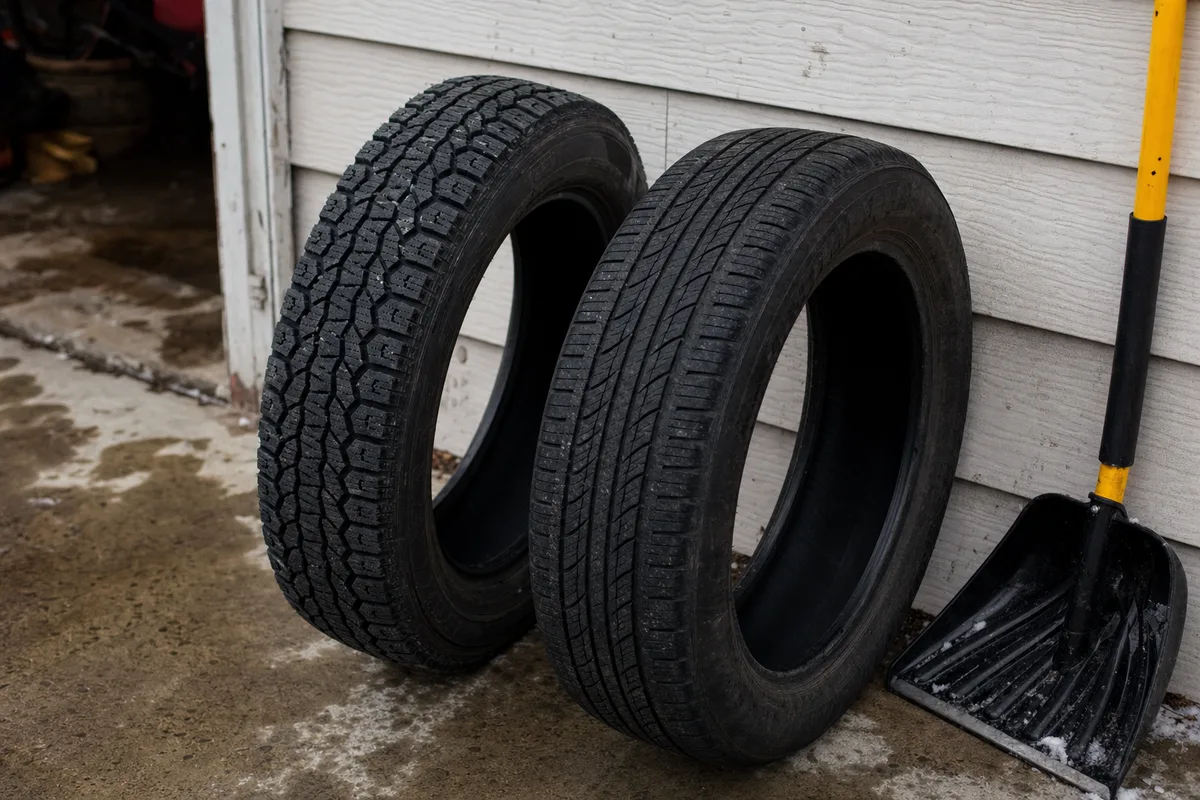
M+S vs 3PMSF: one is a shape, the other is a test
Two sidewall markings drive this whole decision.
- M+S (or M/S, M&S): Mud and Snow. This is a geometric definition from the tire industry: the tire has a minimum ratio of grooves to tread surface and the grooves are a certain width. No performance test is involved. Almost every all-season tire qualifies, and so do many tires that are hopeless on snow.
- 3PMSF (Three-Peak Mountain Snowflake): the tire has passed ASTM F1805, a standardized traction test on medium-packed snow, with at least 10 percent better acceleration traction than a reference tire. It is a real test, though a narrow one: it measures straight-line acceleration in snow, not braking, cornering or ice.
So M+S means "looks like it should do snow" and 3PMSF means "proved it can pull away in snow." Colorado, for example, requires 3PMSF, M+S with at least 3/16 in tread, chains, or AWD on I-70 during traction-law periods. Some mountain passes and Canadian provinces (Quebec, British Columbia highways) require 3PMSF outright. See the all-weather and winter categories to browse tires with the symbol.
| Tire | Dry | Wet | Light snow | Ice |
|---|---|---|---|---|
| All-season | 4 of 5 | 4 of 5 | 2 of 5 | 1 of 5 |
| All-weather | 4 of 5 | 4 of 5 | 4 of 5 | 3 of 5 |
| Winter | 3 of 5 | 4 of 5 | 5 of 5 | 5 of 5 |
| Summer | 5 of 5 | 5 of 5 | 1 of 5 | 1 of 5 |
Relative capability, not test numbers: five blocks is the best any consumer tire does in that condition, one block is the worst. A summer tire hardens below about 45 F, which is why its snow and ice scores collapse.
What actually differs: compound, siping and tread
| All-season | All-weather | Winter | |
|---|---|---|---|
| Markings | M+S | M+S + 3PMSF | 3PMSF (often M+S too) |
| Compound | Stays pliable to about 40 F | Pliable to about 20 F | Pliable well below 0 F, soft above 45 F |
| Siping (fine slits) | Light | Moderate, many zigzag sipes | Dense, 3D sipes across every block |
| Snow traction | Fair on light snow only | Good on snow and slush | Best on snow and ice |
| Dry and warm handling | Best | Good, slightly softer | Squirmy, wears fast above 50 F |
| Tread life | 50,000 to 80,000 mi | 50,000 to 70,000 mi | 30,000 to 40,000 mi (winters only) |
| Typical use | Year-round in mild climates | Year-round in snow-belt cities | November to March, swapped with a summer set |
The compound is the big one. Below about 45 F an all-season compound begins to stiffen and its grip drops even on dry pavement; at 20 F it is markedly worse. A winter compound stays soft at those temperatures, which is why winter tires help on cold, dry mornings too, not only in snow. The tradeoff is that the same soft compound wears quickly and feels vague in July, so winter tires should come off when spring temperatures hold above 45 to 50 F.
How much does it matter? Braking numbers
Independent testing paints a consistent picture. On packed snow, braking from 30 mph, a typical result is:
- Winter tire: about 50 to 60 ft
- All-weather tire: about 65 to 75 ft
- All-season tire: about 90 to 110 ft
On ice the gap is wider still: a winter tire can stop from 15 mph in around 40 ft where a standard all-season needs 60 ft or more. Studless winter tires from Bridgestone (Blizzak), Michelin (X-Ice) and Nokian dominate ice testing; studded tires are better on pure ice but are restricted or banned in many states, including Illinois, Minnesota (except for out-of-state), Texas, Florida and much of the South, and limited to winter months in most others.
All-wheel drive helps you accelerate on snow. It does nothing to help you stop or turn, which is what tires are for. A front-wheel-drive Civic on winter tires will out-brake an AWD SUV on all-seasons every time.
Choosing by region: a US map in words
Generalizations, with the obvious caveat that elevation and a mountain commute change everything.
- Florida, Gulf Coast, southern Texas, Arizona, southern California, Hawaii: all-season, or even summer tires for performance cars. Snow is a once-a-decade event; stay home that day.
- Carolinas, Georgia, Tennessee, Oklahoma, Nevada, Northern California valleys: all-season is standard. All-weather is a reasonable upgrade if you drive at dawn in winter or head to the mountains a few times a year.
- Virginia, Maryland, Kentucky, Missouri, Kansas, Pacific Northwest lowlands: all-weather is the sweet spot. You get a few real snow days and many cold, wet months, and one set of tires handles it.
- Ohio, Indiana, Illinois, Pennsylvania, New Jersey, southern New England, Colorado Front Range, Utah valleys: all-weather is the minimum; a dedicated winter set is the better choice if you must be at work regardless of weather or drive a rear-wheel-drive car.
- Minnesota, Wisconsin, Michigan, Dakotas, upstate New York, Vermont, New Hampshire, Maine, mountain West, Alaska: winter tires from roughly Thanksgiving to April. All-weather is an acceptable compromise for a low-mileage city car.
A useful test: if your area has more than a handful of days a year with snow on the road at commute time, the snowflake symbol pays for itself.
Swipe to compare tread types
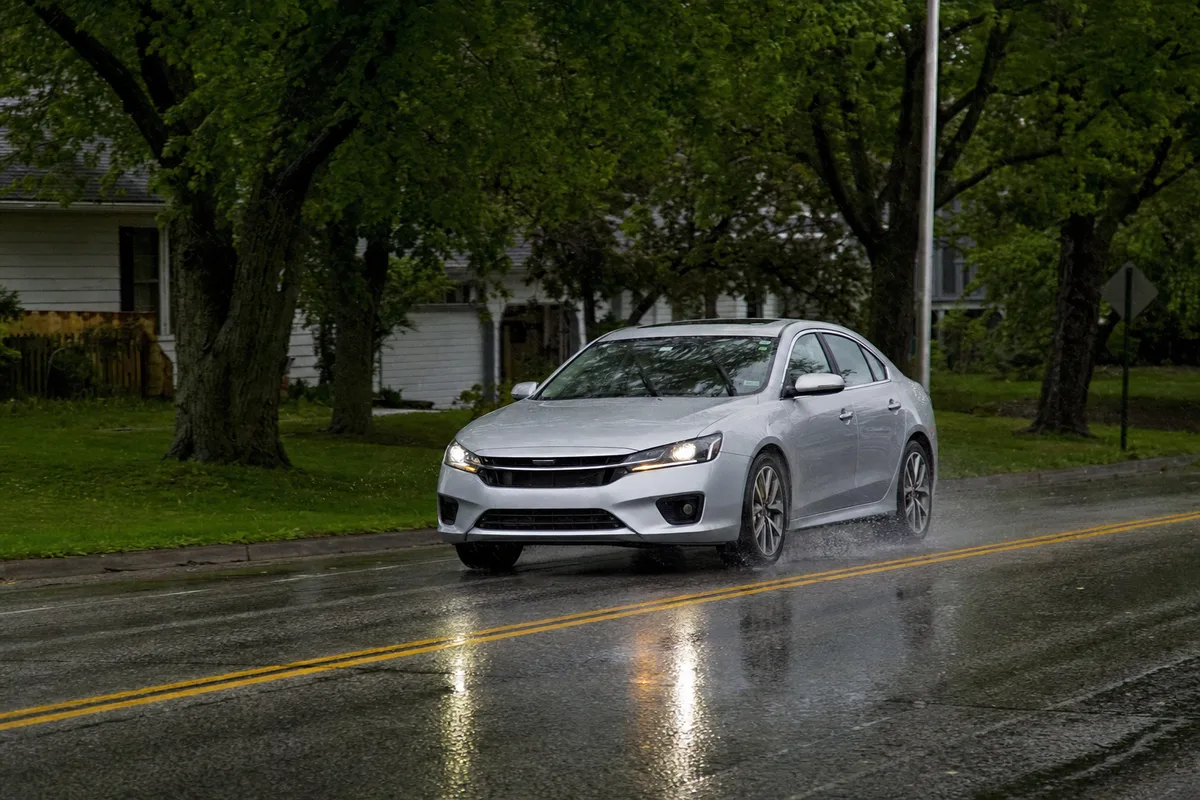
All-Season Tires
The default tire for most US cars: usable year-round in mild climates.
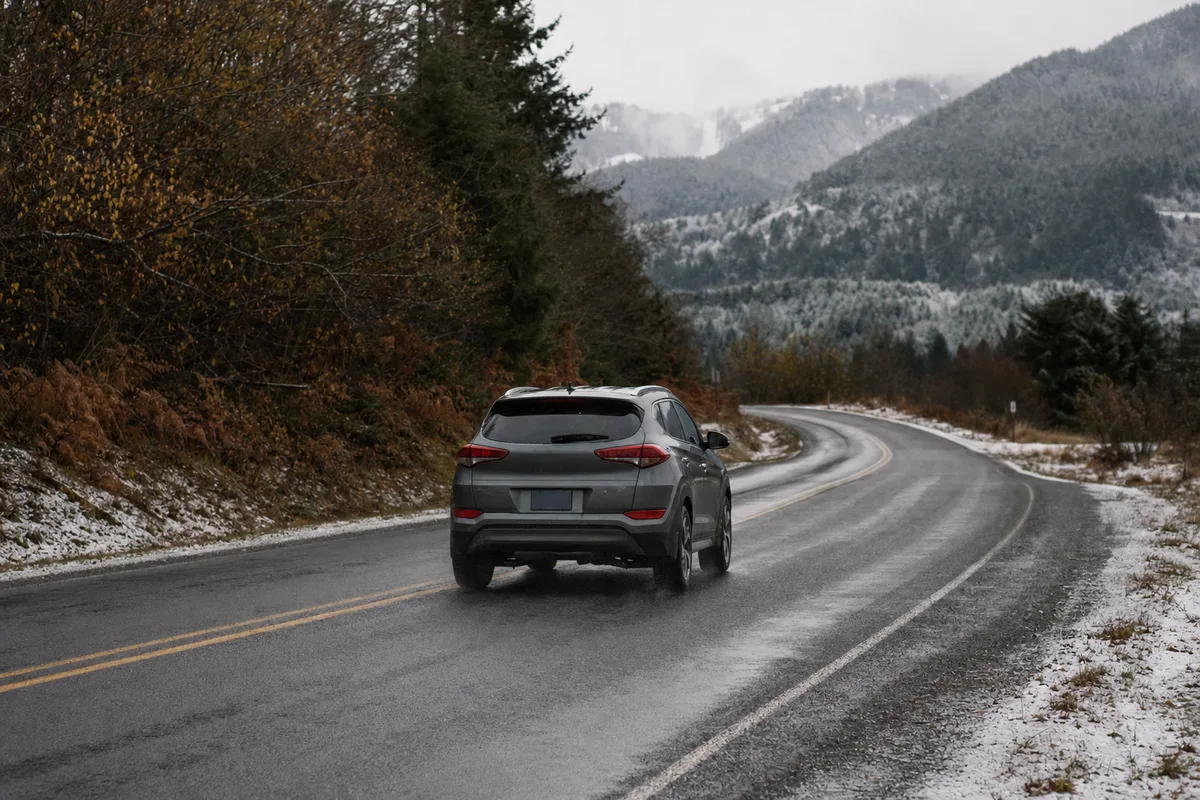
All-Weather Tires
All-season tires with the 3PMSF snow rating, for one set year-round in snow states.
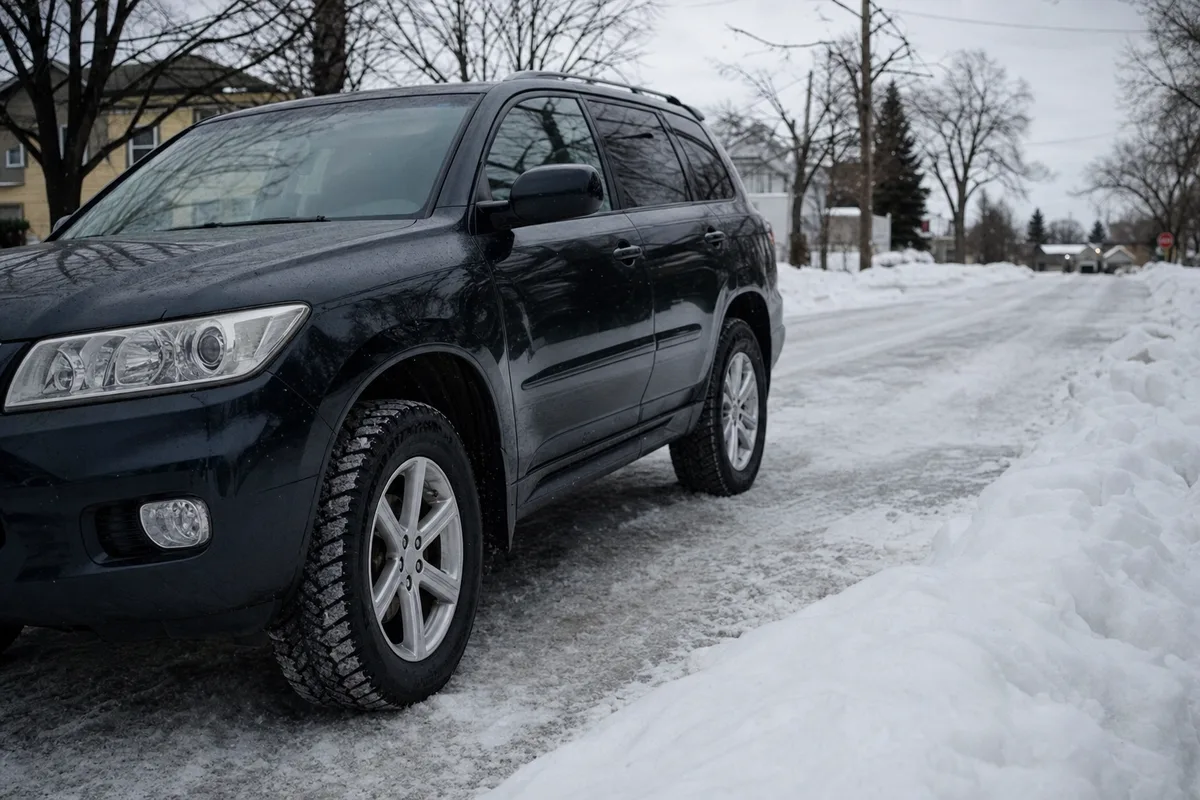
Winter Tires
Dedicated snow and ice tires with soft compounds and dense siping for cold months only.
Summer Tires
Maximum dry and wet grip in warm weather, at the cost of any cold or snow ability.
When an all-weather tire is enough
All-weather tires (Michelin CrossClimate2, Goodyear WeatherReady, Nokian Remedy WRG5, Toyo Celsius II, Firestone WeatherGrip, Vredestein Quatrac) have closed most of the gap for people who see occasional snow. They make sense when:
- You get snow, but plowed roads are the norm within a day and you can wait out a storm.
- You do not have space to store a second set or the budget for winter wheels ($400 to $1,200 for wheels, TPMS sensors and a second set of tires).
- The car is AWD and driven mostly in town.
- You are in a 3PMSF traction-law state such as Colorado and want to be legal on I-70 without chains.
They fall short when you regularly face unplowed roads, ice, steep driveways or a rural commute at 5 a.m. In those places, the extra 20 to 30 percent of snow and ice braking from a true winter tire is the difference that matters. Note also that all-weather tires are still a compromise in the heat: on a hot dry road they give up a little cornering grip and a few thousand miles of tread life compared with a good all-season.
Practical details: buying and swapping
- Speed rating: winter tires are often rated a step lower (T or H instead of V). That is acceptable and legal; just drive accordingly.
- Second set of wheels: mounting and dismounting twice a year costs $60 to $120 per swap and wears the bead. A set of steel or basic alloy winter wheels typically pays for itself in three seasons, and swapping wheels yourself takes half an hour.
- TPMS: a second set needs its own sensors ($40 to $80 each) or you will live with a warning light all winter. Many cars can be set to relearn the sensors automatically.
- Replace winter tires at 5/32 in, not 2/32 in; their snow performance depends on deep siping that disappears as they wear.
- Timing: buy winter tires in September or October when selection is full; by December popular sizes sell out. See the best time to buy.
Frequently asked questions
Are all-season tires OK in snow?
For light snow on plowed roads, an all-season tire with good tread is manageable if you drive gently. On packed snow or ice it needs roughly twice the stopping distance of a winter tire. If snow on the road at commute time is a regular event, choose an all-weather tire with the 3PMSF symbol or a dedicated winter set.
What is the difference between all-season and all-weather tires?
Both are designed to stay on the car year-round, but an all-weather tire has passed the 3PMSF snow traction test and uses a compound that stays flexible at lower temperatures. All-season tires only carry the M+S marking, which is a tread-geometry definition, not a test.
Do I need winter tires if I have AWD?
AWD helps you accelerate on snow but does not shorten braking distance or improve cornering grip; tires do that. An AWD vehicle on all-season tires typically needs a much longer stopping distance on snow than a two-wheel-drive car on winter tires. In real winter climates, AWD plus winter or all-weather tires is the safe combination.
Which states require winter tires?
No US state requires winter tires on all vehicles at all times. Colorado's traction law on I-70 and other mountain corridors requires 3PMSF, M+S with 3/16 in tread, AWD or chains during declared periods, and several western states have chain-control laws on passes. Quebec in Canada requires winter tires from December 1 to March 15.
Updated September 2026.