
EV Tires
Tires built for electric cars: high load capacity, low rolling resistance, low noise.
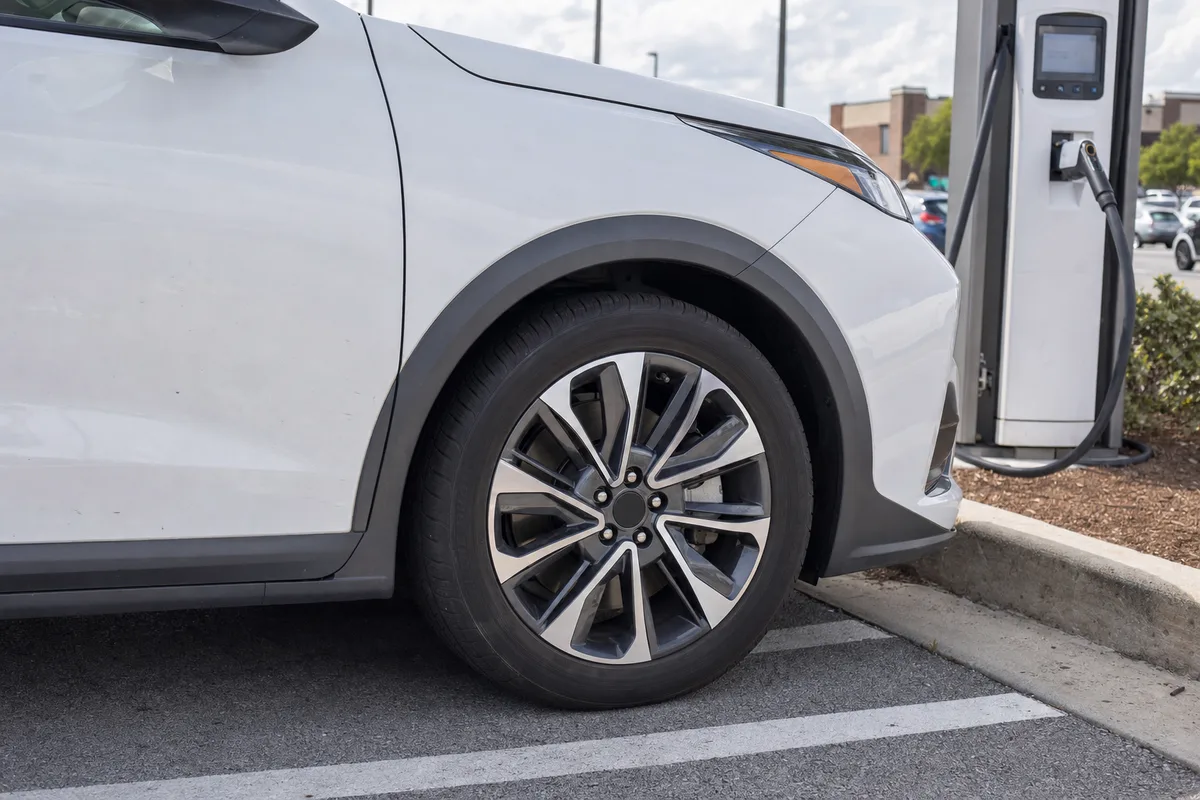
EV tires are ordinary tires optimized for the three things electric vehicles do differently. First, EVs are heavy: a Tesla Model Y weighs about 1,000 pounds more than a similar gas crossover, so the tire needs a higher load index, which usually means an XL or HL (high load) marking. Second, instant torque wears tread quickly, so EV compounds are formulated for durability. Third, without an engine to mask road noise, tire noise dominates the cabin, so most EV tires add a foam liner inside the tire to absorb it. Low rolling resistance rounds out the list, because it directly affects range.
They are for owners of any battery-electric car, and increasingly for plug-in hybrids that share the weight problem. You do not have to buy a tire marked EV. Many premium touring tires meet the load requirement, roll efficiently and are quiet; the Michelin CrossClimate2 and Continental PureContact LS are common non-EV choices on Teslas. What matters is the load index on your door placard, the speed rating and, if range matters to you, a tire known for low rolling resistance.
The honest trade-offs: EV-specific tires cost more, and the foam liner makes puncture repair harder at some shops. Tread life on EVs is short regardless of tire (25,000 to 40,000 miles is common) because of the weight and torque. When shopping, confirm the load index is at least what the placard shows, avoid budget tires that lack XL ratings in your size, and rotate every 5,000 miles. Prices run from about 150 dollars for a mid-tier 18-inch tire to 350 dollars for premium 21-inch sizes.
Buy this if
Owners of battery-electric cars and heavy plug-in hybrids who want the correct load rating, low noise and minimal range loss.
- Load ratings that match heavy EVs
- Foam liners cut cabin noise noticeably
- Low rolling resistance protects range
- Compounds tuned for instant torque
Skip it if
You drive a gas car; an EV-marked tire offers nothing over a good touring tire and costs more.
- More expensive than equivalent touring tires
- Foam liners complicate puncture repair
- Tread life on any EV is short because of weight and torque
Best ev tires right now
Continental PureContact LS
No EV badge, but quiet, efficient and available in XL load ratings for most EV sizes.
Hankook iON evo AS
A purpose-built EV tire with a 50,000-mile warranty at a mid-tier price.
Goodyear ElectricDrive
SoundComfort foam liner and a 60,000-mile warranty, popular on Tesla Model 3 and Y.
Bridgestone Turanza EV
A quiet, long-wearing EV touring tire with a 50,000-mile warranty.
Michelin Pilot Sport EV
The performance choice for Model 3 Performance, Ioniq 5 N and Taycan.
Common sizes for ev tires
EV Tires: common questions
Do I need special tires for an EV?
Not necessarily. You need a tire with a load index at least as high as your door placard shows, which on most EVs means an XL or HL rating. Many premium touring tires qualify. EV-specific tires add foam liners for noise and compounds for torque and range, which are nice to have but not required.
Why do EV tires wear out so fast?
Weight and torque. An EV is typically 20 to 30 percent heavier than a comparable gas car and delivers full torque instantly, which scrubs tread. Typical life is 25,000 to 40,000 miles even on a good tire. Gentle acceleration, correct inflation and rotation every 5,000 miles make a real difference.
Can a tire with a foam liner be repaired?
Usually yes. The foam can be cut away around the puncture and the tire plugged and patched from the inside like any other tire. Some shops decline because of the extra labor, so it helps to call ahead. Manufacturers such as Michelin and Continental publish repair guidelines for their foam-lined tires.
Do EV tires improve range?
Low-rolling-resistance EV tires can add a few percent of range compared with an ordinary tire, typically 3 to 6 percent. Going the other way, an aggressive all-terrain or a heavy tire can cost 10 percent or more. Tire pressure has a larger effect than tire choice, so keep EV tires at the placard pressure.