
When to Replace Your Tires
Replace your tires when tread depth reaches 4/32 of an inch if you drive in rain, and never later than 2/32 in, the federal minimum where wear bars show and the tire is legally worn out in most states. Also replace tires that are more than about six years old with cracking, or ten years old no matter how they look.
New tires start around 10/32 to 12/32 in of tread. Wet braking performance falls off sharply below 4/32 in, long before the tire is illegal, which is why waiting for the wear bars is a bad idea in Seattle or Florida and a tolerable one in Phoenix. Here is how to check and what the wear pattern is telling you.
The tread depth numbers that matter
Tread depth is measured in thirty-seconds of an inch. A cheap depth gauge costs a few dollars; the coin tests below work almost as well.
| Tread depth | Status | What to do |
|---|---|---|
| 10/32 to 12/32 in | New | Nothing |
| 6/32 in | Half worn | Fine in most conditions; start budgeting |
| 5/32 in | Snow performance drops | Replace winter tires at this point |
| 4/32 in | Wet grip drops sharply | Replace if you see regular rain |
| 3/32 in | Marginal | Replace soon; some states inspect at this level |
| 2/32 in | Legal minimum (49 CFR 570.62) | Replace now; wear bars are flush |
Testing by Consumer Reports and Tire Rack has shown that a tire at 4/32 in can need 40 to 90 additional feet to stop from 70 mph on wet pavement compared with a new tire, and at 2/32 in the difference can double. That is the length of several cars.
| Tread depth | Remaining tread |
|---|---|
| Brand new | 10/32 in |
| Still fine | 6/32 in |
| Replace in rain | 4/32 in |
| Legally worn out | 2/32 in |
Federal law calls a tire worn out at 2/32 inch, where the wear bars sit flush with the tread. Wet braking distance starts growing well before that, which is why 4/32 is the practical limit in rain.
The penny test and the quarter test
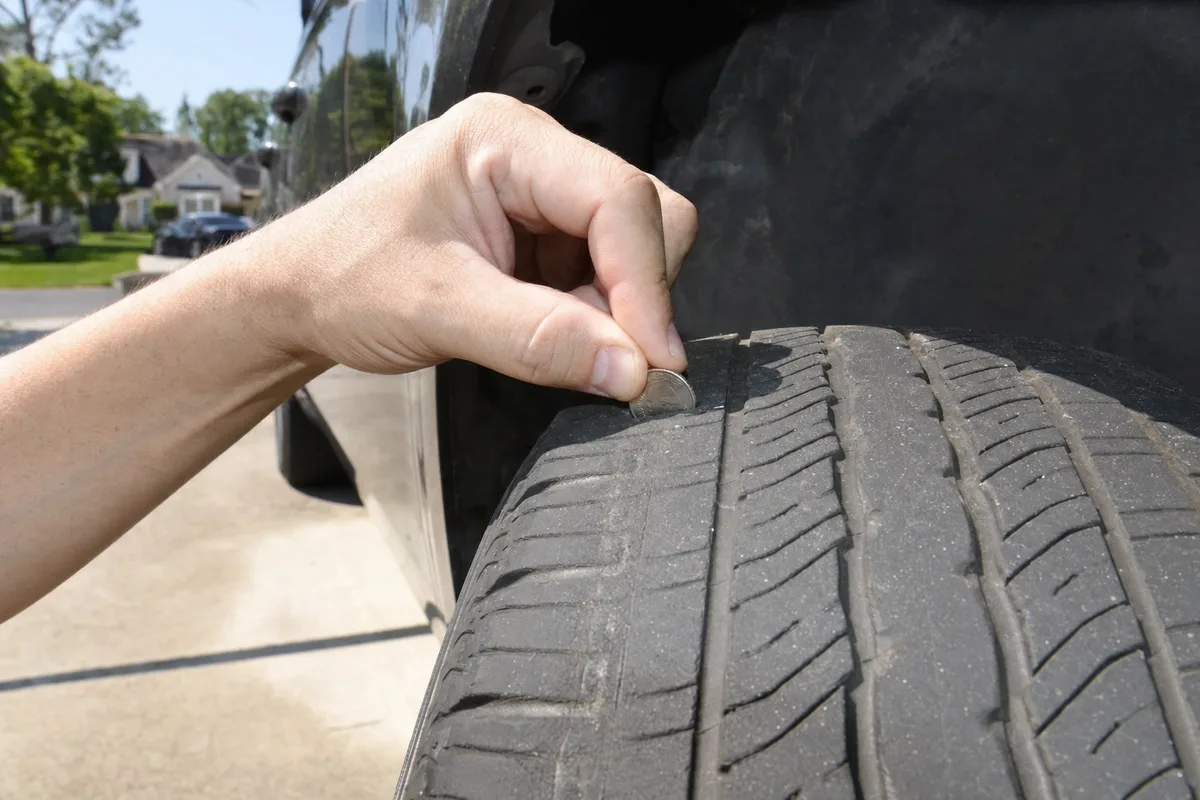
Both tests use the distance from the coin's edge to the top of the president's head.
- Quarter test (4/32 in): insert a quarter head-down into a tread groove. If the tread covers part of Washington's head, you have more than 4/32 in. If you can see all of his head, you are at or below 4/32 in and should plan replacement, especially if you drive in rain.
- Penny test (2/32 in): insert a penny head-down. If Lincoln's entire head is visible, the tread is at or below 2/32 in and the tire is worn out.
Check at least three spots around the tire (inside, center, outside) and on all four tires. A tire can be fine in the center and bald on the inside edge because of alignment, and you will only catch that by checking the edges. Do this once a month when you check pressure.
Tread wear indicators are the simplest check of all: small raised bars molded across the grooves at 2/32 in. When the tread surface is flush with those bars, the tire has reached the legal limit.
Age: 6 years is a warning, 10 years is the end
Rubber oxidizes and hardens with time even if the car sits in a garage. Most tire makers (Michelin, Continental, Bridgestone) say to have tires inspected annually after five years and replaced at ten years regardless of tread. Many automakers, including Ford, Toyota and Nissan, say six years in the owner's manual. Heat accelerates aging, so a tire in Arizona or Texas ages faster than one in Minnesota.
Find the age with the DOT code on the sidewall. The last four digits are the week and year of manufacture: DOT XXXX XXXX 1523 was built in the 15th week of 2023. Our DOT date code guide walks through it. When you buy new tires, ask that they are less than a year or two old; reputable retailers will typically ship stock less than 18 months old and will usually swap a very old one if you ask.
Signs a tire has aged out regardless of the date: fine cracks in the sidewall or between tread blocks (called weather checking or ozone cracking), discoloration, and a hard, glossy feel to the rubber. Cracks deep enough to catch a fingernail mean the tire should be replaced.
What uneven wear is telling you
Tread should wear evenly across the whole width. When it does not, the tire is showing you a problem with the car, and replacing the tire without fixing the cause wastes money.
| Wear pattern | Likely cause | Fix |
|---|---|---|
| Both outer edges worn, center fine | Underinflation | Inflate to the door placard pressure; check monthly |
| Center worn, edges fine | Overinflation | Reduce to placard pressure, not sidewall maximum |
| One edge worn (inside or outside) | Camber or toe out of alignment, worn suspension | Alignment, usually $80 to $200 |
| Sawtooth or feathered blocks (feel it with your hand) | Toe misalignment | Alignment |
| Cupping or scalloped dips around the tire | Worn shocks or struts, imbalance | Replace shocks, rebalance |
| Flat spots | Hard braking with locked wheels, or long storage | Replace if vibration persists |
| Front tires much more worn than rear | Skipped rotations on a front-wheel-drive car | Rotate every 5,000 to 7,500 miles |
See rotation, balancing and alignment for what each service involves.
Swipe to compare tread types

All-Season Tires
The default tire for most US cars: usable year-round in mild climates.
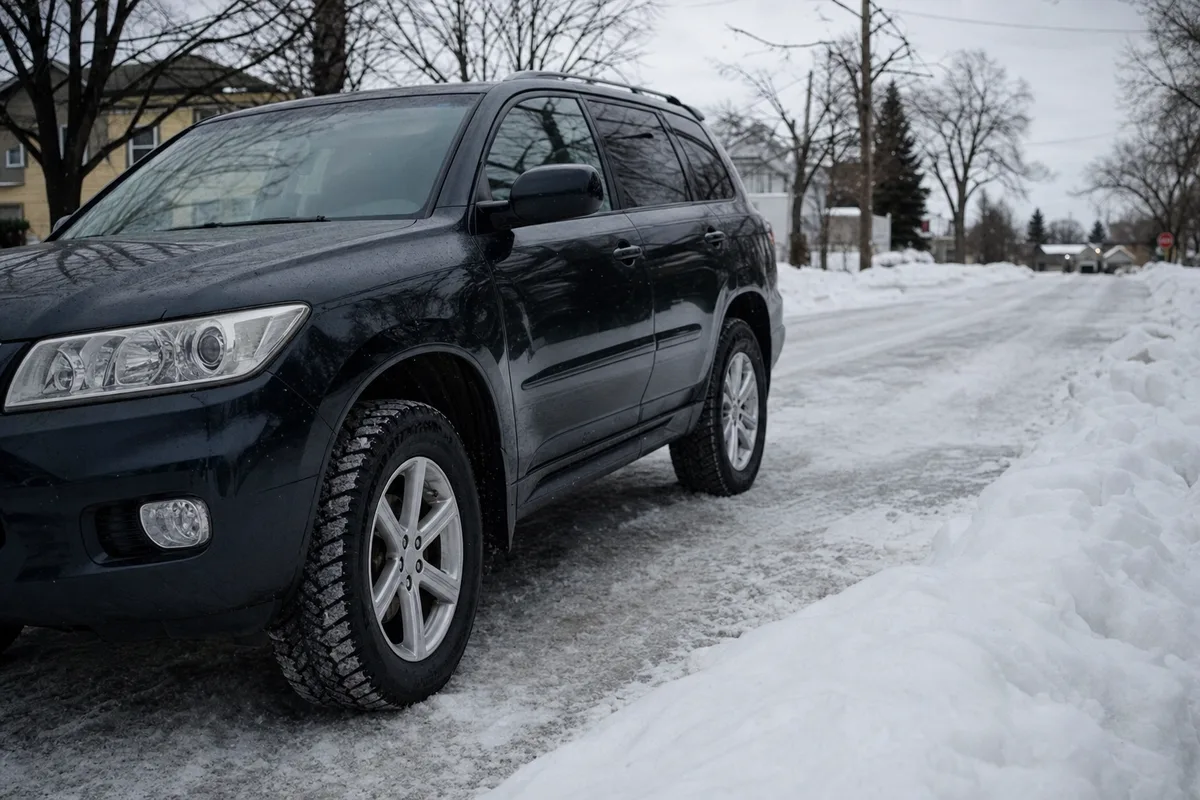
Winter Tires
Dedicated snow and ice tires with soft compounds and dense siping for cold months only.
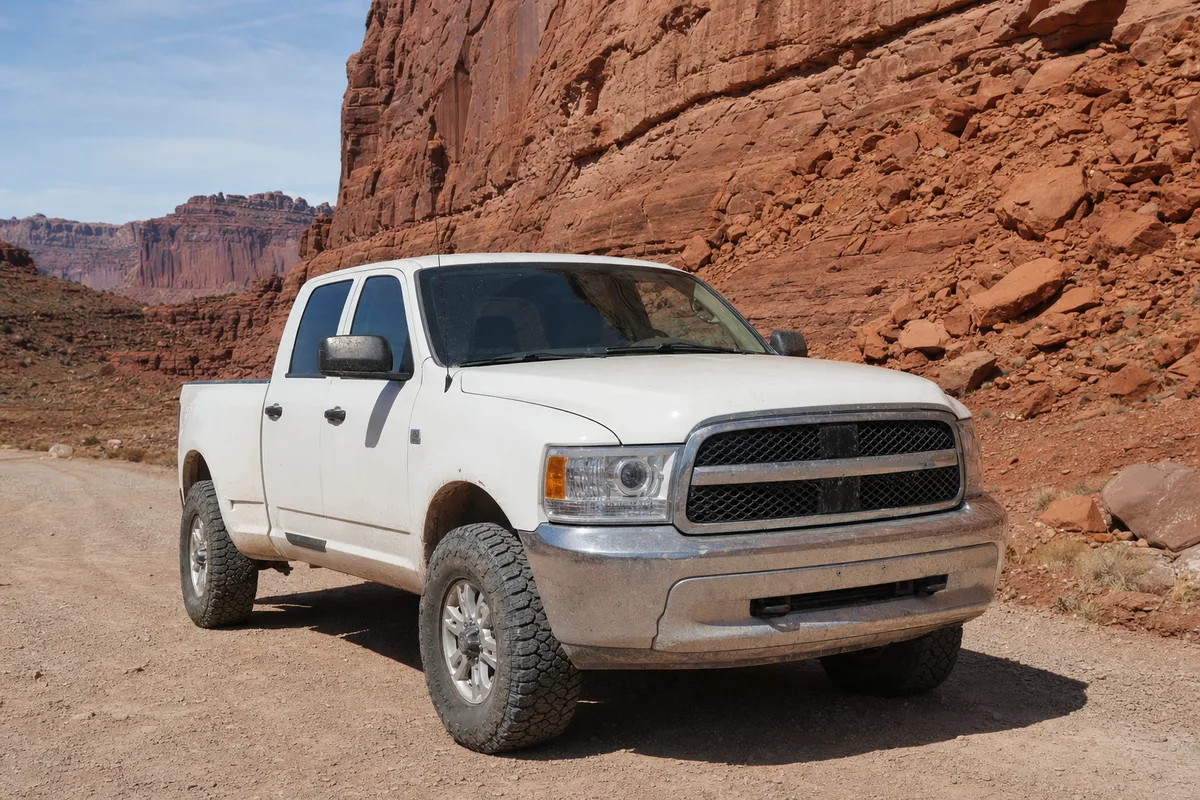
All-Terrain Tires
Truck and SUV tires for dirt, gravel and snow that still drive fine on the highway.
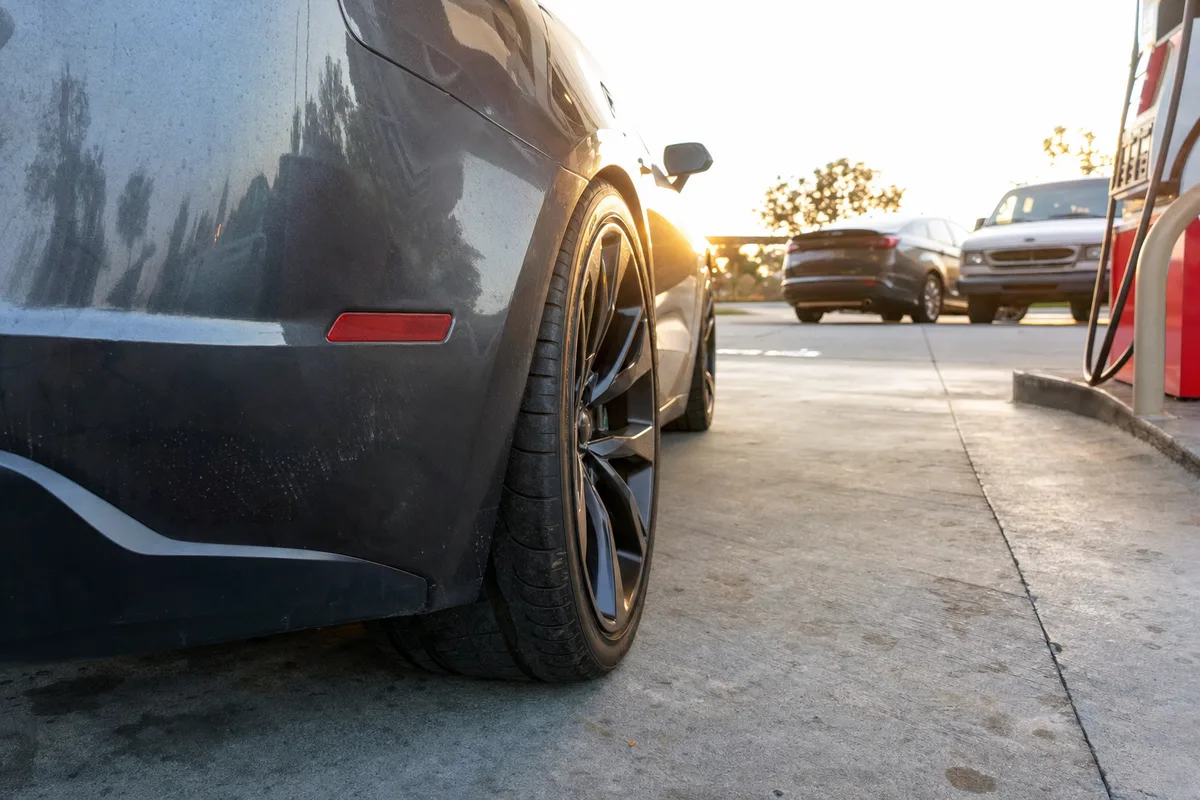
Performance Tires
Ultra-high-performance all-seasons: sporty grip in wet and dry with light-snow ability.
Damage that means replace, not repair
Some tires must go before the tread is worn:
- Sidewall punctures or cuts: the sidewall flexes constantly and cannot hold a patch. Any hole outside the center tread area, roughly the middle three-quarters of the width, is not repairable by industry standards (USTMA).
- Punctures larger than 1/4 in: too big for a plug-patch combination.
- Bulges or bubbles: internal cords have broken, usually from a pothole. The tire can fail at any moment.
- Run-flat tires driven flat: many manufacturers do not permit repair after zero-pressure driving.
- Tires driven on while very low: look for a rubbed, powdery ring on the inner sidewall, which indicates the structure has been heat-damaged.
- Exposed cord or belt: obvious, but people still drive on them.
A proper repair is a plug and patch combination applied from inside the tire, which typically costs $20 to $40. A string plug from the outside is a temporary fix.
Replacing two tires or four?
Ideally replace all four at once so grip and diameter match. If budget only allows two, put the new tires on the rear axle regardless of which wheels drive the car. That is the recommendation of every major tire maker, because a rear axle with less grip lets the car swap ends in a wet corner while a front axle with less grip just pushes wide, which is far easier to control.
Exceptions and rules of thumb:
- All-wheel drive: many AWD systems (Subaru, Audi quattro, most Toyota and Honda systems) require all four tires to be within 2/32 in to 4/32 in of each other in tread depth, or the center differential can overheat. Check your manual; some owners shave a new tire to match, and some dealers require four.
- Same model on an axle: never mix brands or tread patterns left to right.
- Match the type: do not pair a new all-season with a half-worn winter tire on the same axle.
Rebate seasons make a full set cheaper than it looks; see the best time to buy tires and current deals.
Frequently asked questions
What is the legal minimum tread depth in the US?
Federal safety standards set 2/32 of an inch as the point where a tire is worn out, and the tread wear bars molded into every tire appear at that depth. Most states with inspections use 2/32 in, while a few (such as California for commercial vehicles) use slightly different numbers. Manufacturers recommend replacing at 4/32 in if you drive in rain.
How many miles do tires last?
Typical all-season tires last 40,000 to 70,000 miles, performance tires 20,000 to 40,000 and winter tires 30,000 to 40,000. Driving style, rotation, alignment and inflation change these numbers dramatically, and a tire warranty mileage figure assumes proper rotation every 5,000 to 7,500 miles.
Should I replace tires that have good tread but are 8 years old?
Inspect them carefully for sidewall cracking. If they are cracked, replace them now. If they look perfect, most manufacturers allow use to ten years, but many automakers say six, and the rubber has hardened enough that wet grip is noticeably worse than the tread depth suggests.
Can I replace just one tire?
On a two-wheel-drive car, yes, if the other tire on that axle has plenty of tread, though it is better to pair it with the least worn tire on the car. On many AWD vehicles a single new tire violates the manufacturer's tread-difference limit and can damage the drivetrain, so you may need to shave it or buy a pair.
Do tires wear faster on the front?
On front-wheel-drive cars, yes, because the front tires steer, brake and drive. They can wear twice as fast as the rears. Rotating every 5,000 to 7,500 miles evens this out and lets you replace all four together.
Updated September 2026.