
Plymouth tire sizes
6 Plymouth models, with the original tire size for each year range and what that size costs today, from $90 per tire.
We cover 6 Plymouth models across 7 factory fitments, spanning model years 1967 to 1976. The size that turns up most often on a Plymouth is 215/70R14, followed by 235/60R15 and 275/60R15. Wheel diameters run from 14 to 15 inches, so the trim and wheel package matter as much as the model year.
Plymouth does not stamp an approval code on tires the way Porsche and BMW do, so any tire in the right size that meets the load index and speed rating on the door placard is a legitimate replacement. Pick on wet braking, tread life and price instead.
Pick your model below to see the size for every year and trim, what it costs from budget to premium, and which tires are worth buying in that size. If you already know your size, search by size instead, and if you are not sure where to find it, our guide on reading a tire size shows exactly where the placard sits.
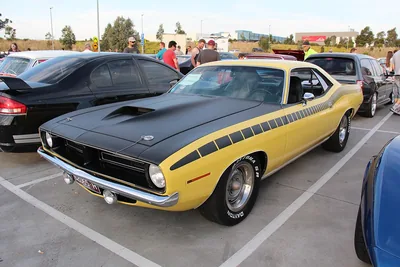 AAR Cuda
1970-1970 · 2 sizes
235/60R15 from $105
AAR Cuda
1970-1970 · 2 sizes
235/60R15 from $105
 Barracuda
1970-1974 · 1 size
215/70R14 from $95
Barracuda
1970-1974 · 1 size
215/70R14 from $95
 Cuda
1970-1971 · 1 size
235/70R15 from $105
Cuda
1970-1971 · 1 size
235/70R15 from $105
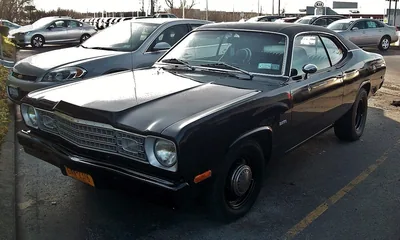 Duster
1970-1976 · 1 size
205/70R14 from $90
Duster
1970-1976 · 1 size
205/70R14 from $90
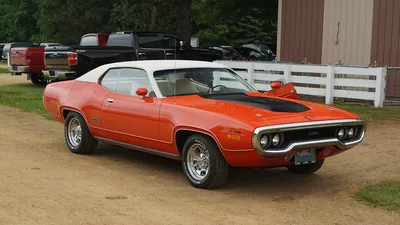 GTX
1967-1971 · 1 size
215/70R14 from $95
GTX
1967-1971 · 1 size
215/70R14 from $95
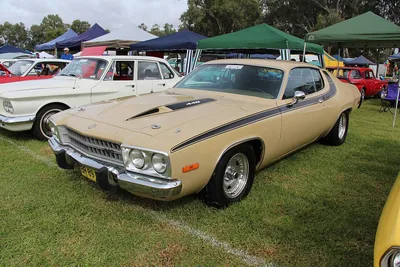 Road Runner
1968-1974 · 1 size
215/70R14 from $95
Road Runner
1968-1974 · 1 size
215/70R14 from $95
Plymouth was Chrysler's entry-level brand from 1928 and the badge on some of the most collectible American cars ever built: the Road Runner, the GTX, the Barracuda and the Superbird. Chrysler wound the brand down in the late 1990s and built the last Plymouth, a Neon, in 2001, moving its remaining models to Chrysler and Dodge. Every Plymouth on this site is a classic, and the tire question is entirely about converting 1960s and 1970s sizes to something you can actually buy.
The audience here is restorers rather than commuters.
Tires on a Plymouth
There is no approval code on any Plymouth and never was. What matters is the conversion from period bias-ply lettered sizes to modern radials, and Plymouth is a good example of why it has to be done by overall diameter: a 1968 to 1974 Road Runner or GTX converts to 215/70R14, a 440 or Hemi Cuda on 15 inch wheels to 235/70R15, and a Duster to 205/70R14. The most interesting case is the 1970 AAR Cuda, which left the factory genuinely staggered with E60-15 front and G60-15 rear, converting to 235/60R15 and 275/60R15; that was very unusual for an American car of the period and it means the car needs two sizes rather than four tires.
Coker Tire and Diamond Back cover both bias-ply reproductions for judged cars and modern radials with period raised white letters or redlines for cars that are driven, and Diamond Back's approach of adding a whitewall to a modern radial gives period looks with modern wet grip. Wheel width is the practical limit: Rallye wheels of the period are typically six or seven inches wide and will not support a much wider tire without rounding the tread.
The models that matter
The Road Runner of 1968 to 1974 and the GTX of 1967 to 1971 both convert to 215/70R14. The 1970 to 1974 Barracuda with the 340 or 383 uses the same size, while the 440 and Hemi Cuda of 1970 to 1971 converts to 235/70R15. The Duster of 1970 to 1976 takes 205/70R14, and the 1970 AAR Cuda is the staggered one at 235/60R15 front and 275/60R15 rear.
What owners find out later
The AAR Cuda's factory stagger means reproduction wheel sets sold as a set of four are often all in the front width, and fitting the rear tire to a front-width rim gives a rounded tread and vague handling. Plymouth and Dodge muscle cars of the same year share sizes, so shopping the Dodge equivalent usually widens the choice. Finally, these cars have drum brakes and no TPMS, so the tire is doing more of the safety work than on a modern car, which is a good argument for a modern radial over a period-correct bias-ply on anything that gets driven.
Did you know?
- The 1970 AAR Cuda was staggered from the factory, with wider rear tires than front, decades before that became normal.
- Chrysler built the last Plymouth in 2001, ending a brand that had existed since 1928.
- Plymouth and Dodge muscle cars of the same year generally share tire sizes, so the Dodge listing is a good cross-reference.