
AMC tire sizes
2 AMC models, with the original tire size for each year range and what that size costs today, from $95 per tire.
We cover 2 AMC models across 2 factory fitments, spanning model years 1968 to 1974. The size that turns up most often on a AMC is 215/70R14.
AMC does not stamp an approval code on tires the way Porsche and BMW do, so any tire in the right size that meets the load index and speed rating on the door placard is a legitimate replacement. Pick on wet braking, tread life and price instead.
Pick your model below to see the size for every year and trim, what it costs from budget to premium, and which tires are worth buying in that size. If you already know your size, search by size instead, and if you are not sure where to find it, our guide on reading a tire size shows exactly where the placard sits.
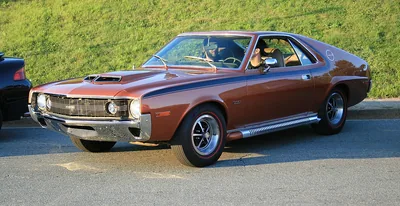
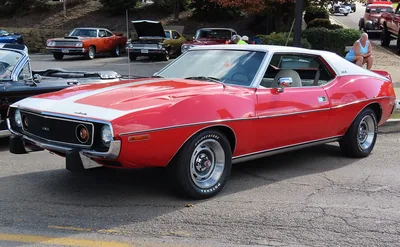
American Motors Corporation was formed in 1954 from the merger of Nash-Kelvinator and Hudson and spent three decades as the fourth American car maker, known for the Javelin and AMX, the Gremlin and Pacer compacts, and for buying Jeep in 1970. Renault took a controlling stake in the early 1980s and Chrysler bought the company in 1987, folding the dealers into its new Eagle brand and keeping Jeep, which is the part of AMC that still exists. The last AMC-badged cars were built for the 1988 model year.
Tires on a AMC
Every AMC left the factory on bias-ply tires in lettered sizes such as E70-14 and F70-14, and almost every surviving car has been converted to radials. On our site the AMX and the Javelin both land on 215/70R14, the usual modern radial equivalent for those 14 inch muscle car fitments, which keeps overall diameter close enough that the speedometer stays honest. There is no approval code of any kind and no AMC-specific construction, so the real question is whether you want a modern radial, a radial with period looks, or a genuine bias-ply.
Coker Tire and Diamond Back sell both: a raised-white-letter radial in the 215/70R14 or 235/70R15 range for a car that gets driven, or a reproduction bias-ply in the original lettered size for a car that gets judged. The trap is wheel width, because a 1968 AMX rim is typically five or six inches wide and a modern wide tire mounted on it takes on a bulged, rounded profile and vague steering. Owners who drive hard usually move to a 15 inch wheel and a 235/60R15 or wider, which needs fender and suspension clearance measured rather than assumed.
The models that matter
The two AMCs we list are the 1968 to 1970 AMX and the 1968 to 1974 Javelin, both on 215/70R14 as the modern radial fit. Larger AMC sedans and wagons of the same era ran 14 and 15 inch sizes that convert into the same 205/75R15 and 235/75R15 range as their Ford and GM equivalents. Gremlins and Pacers used smaller 13 and 14 inch fitments that are now thin on the ground.
What owners find out later
Lettered sizes such as E70-14 cannot be converted to metric by matching numbers, and the only safe conversion is by overall diameter, which is why a period F70-14 becomes a 215/70R14 rather than anything that happens to contain a 70. Wheels from the late sixties often start leaking at the rim seat once a hardened old tire is broken down, so budget for a clean-up or a new valve. Bias-ply tires flat-spot when parked and the wobble for the first mile is normal rather than a balance fault.
Did you know?
- Chrysler bought AMC in 1987 mainly to get Jeep, so the Jeep pages on this site cover the surviving half of the company.
- AMC sold Javelins to police departments in Alabama and California, which specified the heaviest tires then available.
- The last vehicle built on an AMC-designed platform was the Jeep Cherokee XJ, which stayed in production until 2001.